
How to Prepare an Accurate Monthly Trial Balance Report

This includes copying the ledger account balances at a point in time and then checking for possible errors. The adjusted trial balance is completed after the adjusting entries are completed. This trial balance has the final balances in all the accounts and is used to prepare the financial statements. A trial balance sheet is a report that lists the ending balances of each account in the chart of accounts https://www.magetitans.es/interior-designer-s-guide-to-accounting/ in balance sheet order.

Creating Financial Statements
The first method is similar to the preparation of an unadjusted trial balance. However, this time the ledger accounts are first updated and adjusted for the end-of-period adjusting entries, and then account balances are listed to prepare the adjusted trial balance. It is usually used by large companies where a lot of adjusting entries are prepared at the end of each accounting period. From the trial balance alone, you can’t detect missing transactions, general ledger accounts not included in the TB list, or transactions coded to the wrong accounts. A trial balance ensures that total debits equal total credits, verifying the accuracy of financial records before preparing financial statements. A trial balance is an internal financial statement that lists the adjusted closing balances of all general ledger accounts as of a specific date.
- In addition to error detection, the trial balance serves as a reference for preparing financial statements, including the income statement, balance sheet, and cash flow statement.
- A trial balance is a listing of the ledger accounts and their debit or credit balances to determine that debits equal credits in the recording process.
- Although you can prepare a trial balance at any time, you would typically prepare a trial balance before preparing the financial statements.
- One of the main duties of a bookkeeper is to keep track of the full accounting cycle from start to finish.
- This error must be found before a profit and loss statement and balance sheet can be produced.
Related Posts
The bookkeeper will still need to examine the accounts thoroughly again before proceeding to the next step of creating adjusting entries for the period. An unadjusted trial balance is a listing of all the business accounts that are going to appear on the financial statements before year-end adjusting journal entries are made. Since you failed to post the credit side trial balance order of the entry, i.e. the accounts payable of $500, the trial balance may show a total credit amount that is $500 less than the total debits. In this case, you may create a filter that only displays transactions whose amounts are equal to $500 to easily narrow down and identify the entry that needs to be posted correctly.
Do Accounts Receivable Go on an Income Statement?
- Understanding these elements is crucial for effective accounting practices.
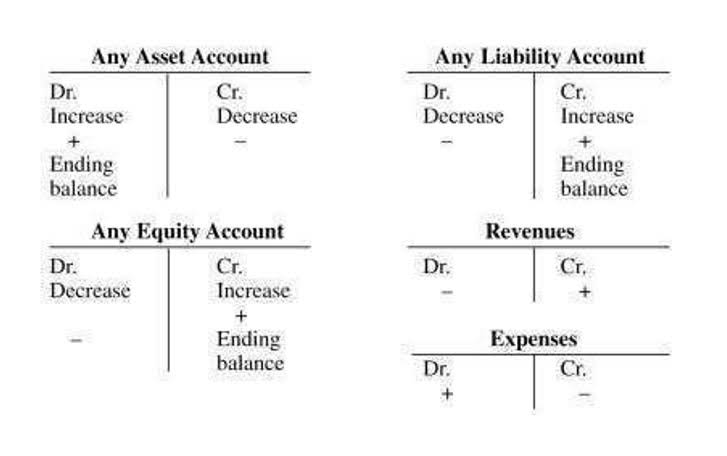
- The first method is to recreate the t-accounts but this time to include the adjusting entries.
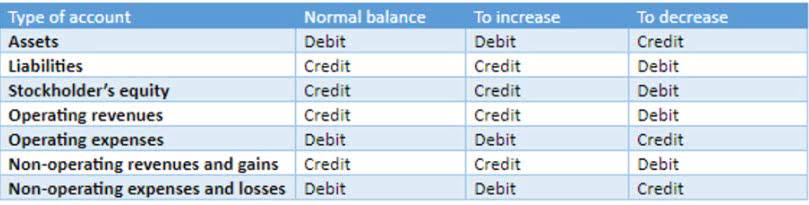
- A debit increases the asset balance while a credit increases the liability or equity.
- As the bookkeepers and accountants examine the report and find errors in the accounts, they record adjusting journal entries to correct them.
- However, only the accounts with ending balances are presented in the trial balance.
- The trial balance is an accounting report that lists the ending balance in each general ledger account.
Note that for this step, we are considering our trial balance to be unadjusted. The unadjusted trial balance in this section includes accounts before they have been adjusted. As you see in step 6 of the accounting cycle, we create another trial balance that is adjusted (see The Adjustment Process).
Mastering the Trial Balance: A Step-by-Step Guide with Examples

If an account has a zero balance, there is no need to list it on the trial balance. Learn how to accurately prepare a monthly trial balance report, ensuring financial accuracy and identifying common errors and necessary adjustments. After completing the trial balance, you can use it to prepare the financial statements because it shows all of the accounts with their balances. Assets, representing the resources owned by a company, Travel Agency Accounting are listed first, usually in order of liquidity. Current assets like cash and accounts receivable precede non-current assets such as property, plant, and equipment. This organization helps assess the company’s capacity to meet short-term obligations.

How to prepare a trial balance
This process helps identify discrepancies before they escalate into significant issues in financial statements. By listing all accounts and their balances, the trial balance facilitates the detection of errors like transposition mistakes or incorrect postings. A trial balance is a critical tool in the accounting process that helps ensure the accuracy of financial records. It serves as a checkpoint to verify that total debits equal total credits, which is essential for preparing financial statements. In this blog, we will discuss how to prepare a trial balance, its importance, purpose, specimen format, and examples.
